Is Pain After Knee Replacement Surgery Normal?
Knee replacement surgery is one of the most successful orthopedic procedures for relieving pain and restoring mobility in patients with advanced knee arthritis. Most patients experience significant improvement in their quality of life following surgery.
However, some individuals continue to experience pain, swelling, stiffness, or walking difficulties months or even years after their knee replacement.
Persistent symptoms should not be ignored, as they may indicate an underlying problem with the implant or surrounding tissues.
Common Causes of Persistent Pain After Knee Replacement
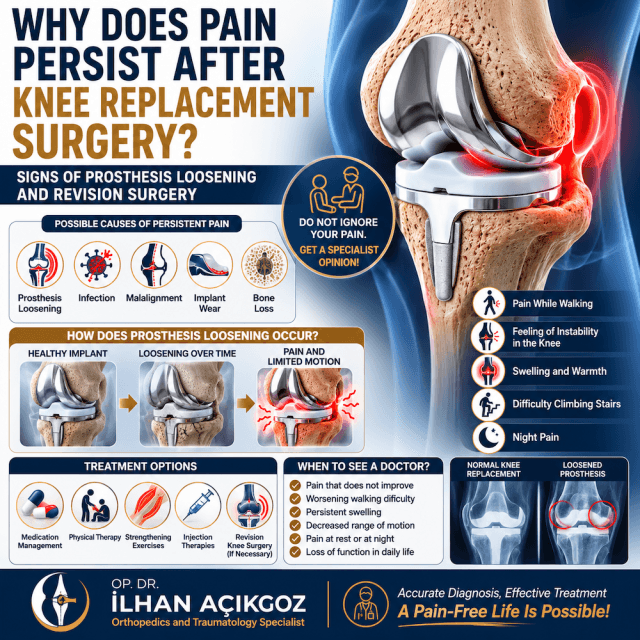
Several conditions can cause ongoing pain following knee replacement surgery:
- Implant loosening
- Periprosthetic joint infection
- Implant wear
- Implant malalignment
- Instability of the knee joint
- Scar tissue formation
- Bone loss around the implant
- Patellofemoral problems
- Fractures around the implant
Identifying the exact cause is essential for successful treatment.
What Is Knee Implant Loosening?
Implant loosening occurs when the bond between the implant and bone gradually weakens.
This may develop because of:
- Long-term wear
- Bone loss
- Implant stress
- Mechanical failure
- Infection
Loosening is one of the most common reasons for revision knee replacement surgery.
Symptoms of Knee Implant Loosening
Patients may experience:
- Increasing knee pain while walking
- Pain during weight-bearing
- Swelling around the knee
- A feeling that the knee is unstable
- Difficulty climbing stairs
- Reduced walking distance
- Progressive loss of function
Many patients report that the knee initially felt better after surgery but gradually became painful again.
Can Infection Cause Pain After Knee Replacement?
Yes.
Periprosthetic joint infection is one of the most serious complications of knee replacement surgery.
Symptoms may include:
- Persistent pain
- Swelling
- Redness
- Warmth around the joint
- Wound drainage
- Stiffness
- Difficulty walking
Importantly, not every patient develops fever. Chronic infections can sometimes present only with pain and implant loosening.
What Does a “Failed Knee Replacement” Mean?
Patients often describe their condition by saying:
- “My knee replacement failed.”
- “The implant did not work.”
- “The surgery was unsuccessful.”
In reality, these complaints may result from:
- Loosening
- Infection
- Implant malposition
- Instability
- Mechanical wear
- Soft tissue imbalance
A detailed orthopedic evaluation is required to determine the exact cause.
How Is Persistent Knee Replacement Pain Evaluated?
A comprehensive assessment may include:
- Clinical examination
- X-rays
- CT scans
- Blood tests
- Infection screening
- Joint aspiration when necessary
- Advanced imaging studies
Distinguishing between infection and mechanical loosening is one of the most important parts of the diagnostic process.
When Is Revision Knee Replacement Necessary?
Revision knee replacement surgery may be recommended when:
- Implant loosening is present
- Infection develops
- Implant wear becomes severe
- The implant is unstable
- Significant bone loss occurs
- Persistent pain affects quality of life
- Mechanical failure is identified
Revision surgery is generally more complex than the initial knee replacement procedure and requires specialized expertise.
What Is Revision Knee Replacement Surgery?
Revision knee replacement involves replacing part or all of the existing implant with a new prosthesis.
The procedure may require:
- Removal of the old implant
- Reconstruction of bone defects
- Soft tissue balancing
- Management of infection when present
- Placement of specialized revision implants
The surgical plan depends on the cause of implant failure and the condition of the surrounding bone and soft tissues.
Can Revision Surgery Relieve Pain?
In properly selected patients, revision surgery can:
- Reduce pain
- Improve stability
- Restore mobility
- Correct mechanical problems
- Improve overall function
Success largely depends on identifying and treating the underlying cause of the symptoms.
Evaluation by Op. Dr. İlhan AÇIKGÖZ
Op. Dr. İlhan AÇIKGÖZ provides comprehensive assessment and treatment for persistent pain after knee replacement, implant loosening, periprosthetic infection and complex revision knee replacement surgery. Every patient undergoes a detailed evaluation to determine the cause of symptoms and develop the most appropriate treatment strategy.
Frequently Asked Questions
Is pain normal years after knee replacement surgery?
Persistent or worsening pain years after surgery should be evaluated, as it may indicate loosening, infection or implant-related problems.
Can a loose knee implant heal on its own?
No. Implant loosening does not resolve spontaneously and typically requires medical evaluation and treatment.
How long does a knee replacement last?
Modern knee replacements often function successfully for many years, but longevity depends on patient factors, implant design and overall joint health.
How do I know if my knee replacement is loose?
Increasing pain during walking, instability, swelling and progressive loss of function may suggest implant loosening.
When is revision surgery needed?
Revision surgery is considered when loosening, infection, instability, wear or severe pain significantly affects daily life.
Conclusion
While knee replacement surgery is highly successful for most patients, persistent pain should never be ignored. Implant loosening, infection, wear and mechanical problems can all contribute to ongoing symptoms. Early diagnosis and timely treatment can help prevent further complications and improve long-term outcomes.