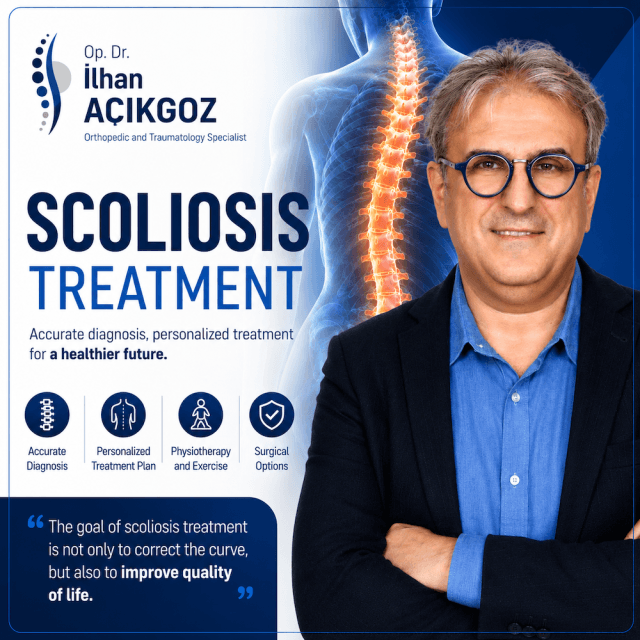
Scoliosis Treatment: When Does Spinal Curvature Require Medical Attention?
Scoliosis is one of the most common spinal conditions affecting children, adolescents, and adults. Characterized by an abnormal sideways curvature of the spine, scoliosis can range from mild postural changes to severe spinal deformities that affect mobility, appearance, and overall quality of life.
Early diagnosis and appropriate treatment are essential to prevent curve progression and long-term complications.
What Is Scoliosis?
Scoliosis is a three-dimensional spinal deformity in which the spine curves abnormally to the side and may also rotate.
When viewed from behind, a healthy spine appears straight. In patients with scoliosis, the spine may form an “S” or “C” shape.
While mild scoliosis may cause few symptoms, more advanced curves can affect posture, balance, lung function, and physical activity.
Types of Scoliosis
Adolescent Idiopathic Scoliosis
This is the most common form of scoliosis and usually develops between the ages of 10 and 18.
The exact cause remains unknown, although genetic factors are believed to play an important role.
Congenital Scoliosis
Caused by abnormal spinal development before birth.
Neuromuscular Scoliosis
Associated with conditions such as cerebral palsy, muscular dystrophy, or spinal cord disorders.
Adult Degenerative Scoliosis
Develops later in life due to age-related degeneration of spinal discs and joints.
Symptoms of Scoliosis
Common signs include:
- Uneven shoulders
- One shoulder blade appearing more prominent
- Uneven waistline
- Rib prominence
- Leaning to one side
- Back pain
- Fatigue during prolonged standing
- Reduced spinal flexibility
In severe cases:
- Breathing difficulties
- Reduced physical endurance
- Significant cosmetic deformity
may occur.
How Is Scoliosis Diagnosed?
Diagnosis begins with a detailed physical examination and posture assessment.
Advanced imaging studies may include:
- Standing spinal X-rays
- EOS imaging
- MRI scans
- CT scans (when necessary)
The degree of spinal curvature is measured using the Cobb angle, which helps determine the most appropriate treatment strategy.
Can Scoliosis Be Prevented?
Most forms of idiopathic scoliosis cannot be prevented.
However, early screening and regular follow-up can help detect progression before severe deformities develop.
Parents should seek evaluation if they notice asymmetry in their child’s shoulders, back, or posture.
Non-Surgical Treatment for Scoliosis
Many patients do not require surgery.
Conservative treatment options may include:
Observation
Small curves may only require periodic monitoring.
Physical Therapy
Specific exercises can improve posture, flexibility, and muscular balance.
Scoliosis Bracing
Bracing may help prevent progression in growing children and adolescents.
When Is Scoliosis Surgery Necessary?
Surgery may be considered when:
- The curve continues to progress
- The Cobb angle becomes severe
- Significant spinal imbalance develops
- Conservative treatment fails
- Lung function becomes affected
- Pain or functional limitations worsen
The goal of surgery is to correct spinal alignment, prevent progression, and improve long-term function.
Modern Scoliosis Surgery
Advances in spine surgery have significantly improved safety and outcomes.
Modern techniques may include:
- Spinal instrumentation
- Pedicle screw fixation
- Corrective spinal fusion
- Deformity correction procedures
Surgical planning is individualized according to the patient’s age, curve pattern, and overall spinal balance.
Adult Scoliosis Treatment
Adult scoliosis is increasingly common and may present differently from adolescent scoliosis.
Symptoms often include:
- Chronic back pain
- Leg pain
- Spinal imbalance
- Walking difficulties
- Degenerative disc disease
Treatment may involve physical therapy, injections, pain management, or advanced spine surgery when necessary.
Evaluation by Op. Dr. İlhan AÇIKGÖZ
Op. Dr. İlhan AÇIKGÖZ provides comprehensive evaluation and treatment for scoliosis, spinal deformities, and complex spine disorders. Every patient undergoes a detailed assessment to determine the most appropriate treatment strategy, whether conservative management or advanced surgical correction.
His patient-centered approach focuses on preserving function, improving posture, reducing pain, and achieving long-term spinal health.
Frequently Asked Questions
At what age does scoliosis usually develop?
Most cases develop during adolescence, particularly between ages 10 and 18.
Can scoliosis worsen over time?
Yes. Untreated scoliosis can progress, especially during periods of rapid growth.
Does every scoliosis patient need surgery?
No. Most patients can be managed with observation, physical therapy, or bracing.
Can adults develop scoliosis?
Yes. Degenerative scoliosis commonly develops later in life due to spinal wear and tear.
Is scoliosis surgery safe?
Modern scoliosis surgery is highly advanced and can provide excellent outcomes when performed in appropriately selected patients.
Conclusion
Scoliosis is a complex spinal condition that can affect posture, mobility, and quality of life. Early diagnosis, regular monitoring, and individualized treatment are essential to prevent progression and achieve the best possible outcomes. Whether treatment involves observation, bracing, physical therapy, or surgery, timely evaluation by an experienced spine specialist plays a critical role in long-term spinal health.