
Are Knee Clicking Sounds Normal?
Many people notice clicking, popping, or cracking sounds coming from their knees while walking, climbing stairs, squatting, or standing up. In many cases, these sounds are harmless. However, when knee noises are accompanied by pain, swelling, instability, or limited movement, they may indicate an underlying orthopedic condition.
Understanding the cause of knee clicking is important for maintaining long-term joint health and preventing more serious problems.
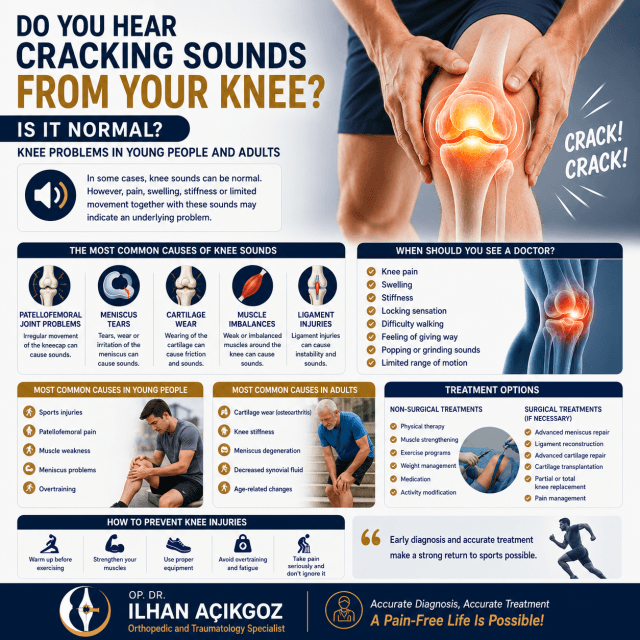
Why Does My Knee Click or Pop?
The medical term for clicking or grinding sensations in a joint is crepitus.
Several factors can cause knee noises, including:
- Air bubbles within the joint fluid
- Tendons or ligaments moving over bone
- Patellar tracking problems
- Cartilage wear
- Meniscus injuries
- Early arthritis
- Joint instability
Not all knee sounds indicate damage, but persistent symptoms should be evaluated by an orthopedic specialist.
When Is Knee Clicking Normal?
In many healthy individuals, occasional clicking occurs without pain or functional limitation.
Normal knee sounds may occur:
- During deep squats
- When standing after prolonged sitting
- While climbing stairs
- During stretching exercises
If there is no pain, swelling, locking, or instability, these sounds are often considered harmless.
When Should Knee Clicking Be Evaluated?
Medical evaluation is recommended if knee clicking is accompanied by:
- Pain
- Swelling
- Locking of the knee
- Difficulty walking
- Knee instability
- Limited range of motion
- Recurrent symptoms
These signs may indicate an underlying structural problem.
Patellar Problems and Knee Clicking
The kneecap (patella) plays an important role in knee function.
If the patella does not move smoothly within its groove, patients may experience:
- Clicking
- Grinding
- Pain when climbing stairs
- Pain while squatting
- A feeling of rubbing beneath the kneecap
This condition is commonly associated with patellofemoral pain syndrome.
Can a Meniscus Tear Cause Clicking?
Yes.
The meniscus acts as a shock absorber inside the knee joint. A tear may produce:
- Clicking
- Catching sensations
- Locking episodes
- Pain during twisting movements
- Swelling
Meniscus injuries are particularly common in athletes and active individuals.
Cartilage Damage and Knee Grinding
Cartilage damage may cause a grinding sensation during movement.
Patients often report:
- Crunching sounds
- Grinding under the kneecap
- Pain during activity
- Stiffness
- Swelling after exercise
Early diagnosis may help prevent further joint deterioration.
Knee Clicking in Young Adults
Young adults commonly experience knee noises due to:
- Sports activities
- Muscle imbalance
- Patellar maltracking
- Ligament laxity
- Overuse injuries
Most cases can be successfully managed when addressed early.
Knee Clicking in Older Adults
In adults and older individuals, knee clicking may be associated with:
- Osteoarthritis
- Cartilage degeneration
- Meniscus wear
- Joint inflammation
Persistent symptoms should not be ignored, especially when pain is present.
How Are Knee Problems Diagnosed?
Evaluation may include:
- Physical examination
- X-rays
- MRI scans
- Functional movement assessment
Accurate diagnosis helps determine the most appropriate treatment strategy.
Treatment for Knee Clicking and Knee Problems
Treatment depends on the underlying cause.
Non-Surgical Treatment
Many patients benefit from:
- Physical therapy
- Activity modification
- Strengthening exercises
- Weight management
- Anti-inflammatory treatment
Surgical Treatment
Surgery may be considered when symptoms result from:
- Meniscus tears
- Cartilage injuries
- Recurrent patellar instability
- Significant structural abnormalities
Modern arthroscopic procedures can often treat these conditions through minimally invasive techniques.
Evaluation by Op. Dr. İlhan AÇIKGÖZ
Op. Dr. İlhan AÇIKGÖZ provides comprehensive evaluation and treatment for knee disorders, including patellar instability, cartilage injuries, meniscus tears, sports injuries, and degenerative knee conditions. Individualized treatment plans are designed to restore mobility, reduce pain, and protect long-term joint function.
Frequently Asked Questions
Is knee clicking always a sign of damage?
No. Many clicking sounds are harmless and occur without underlying injury.
Why does my knee click when I squat?
This may be related to patellar tracking, tendon movement, or joint mechanics. Persistent symptoms should be evaluated.
Can arthritis cause knee cracking sounds?
Yes. Cartilage wear associated with arthritis commonly causes grinding and cracking sensations.
Should I worry if my knee clicks without pain?
Occasional painless clicking is often normal. However, persistent symptoms or new changes should be assessed by a specialist.
Can physical therapy help knee clicking?
Yes. Many cases related to muscle imbalance or patellar tracking improve with targeted rehabilitation programs.
Conclusion
Knee clicking, popping, and cracking sounds are common and often harmless. However, when these symptoms occur alongside pain, swelling, instability, or movement limitations, they may indicate underlying conditions such as patellar disorders, meniscus injuries, cartilage damage, or arthritis. Early orthopedic evaluation can help identify the cause and guide the most effective treatment plan.