Common Sports Injuries: ACL Tears, Meniscus Injuries and Cartilage Damage
Sports participation offers significant health benefits, but it also increases the risk of injuries involving the joints, ligaments, cartilage, and muscles. Whether you are a professional athlete or a recreational sports enthusiast, knee injuries are among the most common reasons for orthopedic consultation.
Sudden twisting movements, awkward landings, direct impact, and high-intensity sports can lead to serious injuries that may require specialized treatment.
Among the most frequently encountered sports injuries are:
- ACL tears
- Meniscus tears
- Cartilage injuries
- Knee ligament injuries
- Shoulder injuries
- Ankle ligament injuries
Early diagnosis and appropriate treatment are essential for achieving a successful recovery and returning safely to sports.
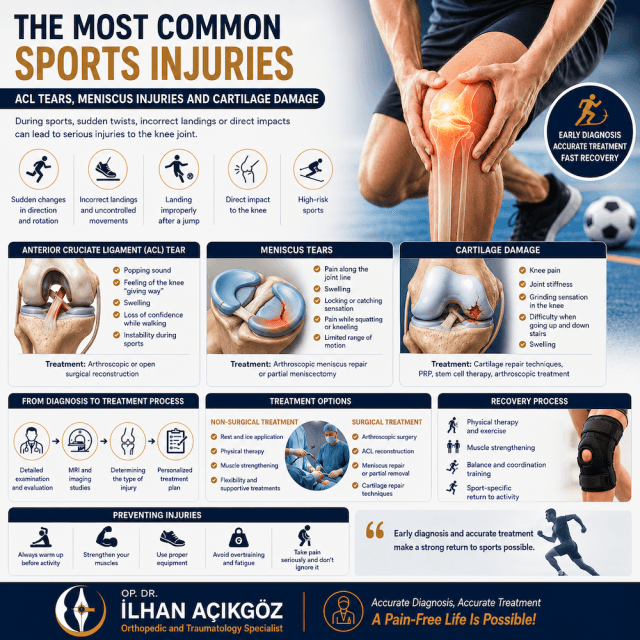
What Is an ACL Tear?
The Anterior Cruciate Ligament (ACL) is one of the primary stabilizing ligaments of the knee.
ACL injuries commonly occur during:
- Football (soccer)
- Basketball
- Skiing
- Volleyball
- Tennis
- Rugby
- Pivoting sports
Many patients describe hearing or feeling a “pop” at the moment of injury.
Common ACL Tear Symptoms
- Sudden knee pain
- A popping sensation
- Rapid swelling
- Knee instability
- Difficulty walking
- Loss of athletic performance
ACL tears frequently occur together with meniscus or cartilage injuries.
What Is a Meniscus Tear?
The meniscus acts as a shock absorber within the knee joint.
Meniscus injuries may occur due to:
- Sports trauma
- Twisting injuries
- Sudden directional changes
- Degenerative wear in older adults
Meniscus Tear Symptoms
- Knee pain
- Swelling
- Locking sensation
- Clicking or catching
- Difficulty squatting
- Limited range of motion
Untreated meniscus injuries may contribute to long-term joint degeneration.
What Is Cartilage Damage?
Articular cartilage covers the surfaces of bones within the joint and allows smooth movement.
Cartilage injuries can result from:
- Sports trauma
- Repetitive impact
- Previous injuries
- Joint instability
- Degenerative changes
Symptoms of Cartilage Injury
- Persistent knee pain
- Swelling after activity
- Mechanical symptoms
- Reduced athletic performance
- Joint stiffness
Because cartilage has limited healing potential, early treatment is often important.
Why Early Diagnosis Matters
Ignoring a sports injury may lead to:
- Chronic instability
- Progressive cartilage damage
- Meniscus deterioration
- Early arthritis
- Reduced athletic performance
Advanced imaging studies such as MRI can help determine the extent of injury and guide treatment decisions.
Treatment Options for Sports Injuries
Treatment depends on:
- Injury severity
- Patient age
- Activity level
- Athletic goals
- Associated injuries
Non-Surgical Treatment
Many injuries can be managed with:
- Physical therapy
- Activity modification
- Bracing
- Anti-inflammatory treatment
- Rehabilitation programs
Surgical Treatment
Surgery may be recommended for:
- Complete ACL tears
- Complex meniscus tears
- Significant cartilage damage
- Persistent instability
- High-level athletes seeking return to competition
Modern arthroscopic techniques allow many sports injuries to be treated through minimally invasive procedures.
ACL Reconstruction Surgery
ACL reconstruction is one of the most common sports medicine procedures worldwide.
The procedure aims to:
- Restore knee stability
- Prevent further injury
- Improve athletic performance
- Reduce future cartilage damage
Successful rehabilitation is just as important as the surgery itself.
Return to Sports After Injury
Returning too early may increase the risk of reinjury.
A safe return-to-sport program should evaluate:
- Strength
- Balance
- Joint stability
- Functional performance
- Sport-specific movement patterns
Each athlete requires an individualized recovery plan.
Sports Injury Evaluation by Op. Dr. İlhan AÇIKGÖZ
Op. Dr. İlhan AÇIKGÖZ provides comprehensive evaluation and treatment for sports-related orthopedic injuries, including ACL tears, meniscus injuries, cartilage damage, ligament injuries, and complex knee disorders. Treatment plans are tailored to each patient’s activity level, performance goals, and long-term joint health.
Frequently Asked Questions
Can an ACL tear heal without surgery?
Complete ACL tears typically do not heal naturally. Treatment depends on instability, activity level, and patient goals.
Is every meniscus tear treated surgically?
No. Many meniscus injuries can be managed conservatively depending on tear type and symptoms.
Can cartilage damage regenerate?
Cartilage has limited healing capacity, but several modern treatment options may improve symptoms and joint function.
How long does recovery take after ACL reconstruction?
Recovery timelines vary, but returning to competitive sports often requires several months of rehabilitation.
What is the most common sports knee injury?
ACL tears and meniscus injuries are among the most frequently diagnosed sports-related knee injuries.
Conclusion
Sports injuries such as ACL tears, meniscus tears, and cartilage damage can significantly affect mobility, performance, and long-term joint health. Early diagnosis, expert orthopedic evaluation, and individualized treatment are critical for achieving optimal recovery and safely returning to sports and active living.