Why Do Groin Pain and Limping Develop?
Hip pain is one of the most common orthopedic complaints affecting adults, particularly those over the age of 40. Because the hip joint carries much of the body’s weight during standing, walking, climbing stairs, and exercise, even minor joint problems can significantly affect daily life.
Patients often describe their symptoms as:
- Pain in the groin
- Limping while walking
- Difficulty climbing stairs
- Pain spreading to the thigh or knee
- Stiffness after sitting
- Difficulty putting on shoes and socks
In many cases, these symptoms may indicate hip arthritis or another underlying hip disorder.
What Is Hip Arthritis?
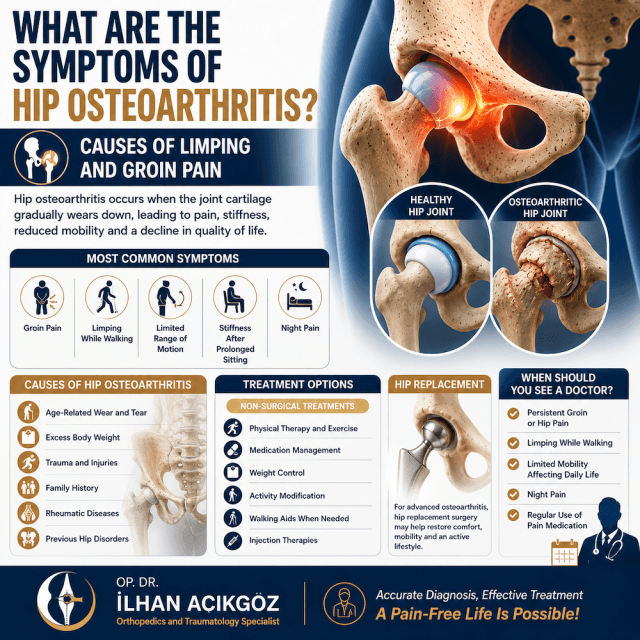
Hip arthritis, also known as hip osteoarthritis, occurs when the cartilage covering the hip joint gradually wears away.
As cartilage deteriorates, the bones begin to rub against each other, causing:
- Pain
- Stiffness
- Reduced mobility
- Limping
- Loss of function
Hip arthritis is one of the leading causes of disability among older adults.
Common Symptoms of Hip Arthritis
Typical symptoms include:
- Groin pain
- Hip stiffness
- Limping
- Pain when walking
- Difficulty standing after sitting
- Reduced range of motion
- Pain radiating to the thigh or knee
- Difficulty climbing stairs
The pain usually develops gradually and becomes more noticeable over time.
Why Does Hip Arthritis Cause Groin Pain?
The hip joint is located deep within the groin region. As a result, arthritis-related pain is frequently felt in the groin rather than directly over the side of the hip.
Patients often report:
“I feel pain deep in my groin.”
This symptom is one of the most important clues suggesting a hip joint problem.
Why Do Patients Start Limping?
Limping is the body’s natural response to pain and reduced joint function.
As hip arthritis progresses:
- Joint movement becomes painful
- Muscles weaken
- Walking mechanics change
- Weight-bearing becomes difficult
These changes often lead to a noticeable limp.
Other Causes of Groin Pain and Limping
Although hip arthritis is common, several other conditions may produce similar symptoms.
These include:
- Labral tears
- Hip impingement syndrome
- Avascular necrosis
- Stress fractures
- Tendon injuries
- Hip bursitis
- Muscle strains
- Previous trauma
Accurate diagnosis is essential for selecting the correct treatment.
When Should You See an Orthopedic Specialist?
Medical evaluation is recommended if you experience:
- Persistent groin pain
- Limping that worsens over time
- Hip stiffness
- Difficulty walking long distances
- Pain affecting sleep
- Reduced mobility
Early diagnosis can help slow disease progression and improve treatment outcomes.
How Is Hip Arthritis Diagnosed?
Diagnosis typically involves:
- Medical history review
- Physical examination
- X-rays
- MRI scans when necessary
- Advanced imaging studies
Imaging helps determine the severity of cartilage loss and joint degeneration.
Treatment Options for Hip Arthritis
Non-Surgical Treatment
Early-stage arthritis may be managed with:
- Activity modification
- Physical therapy
- Weight management
- Anti-inflammatory medication
- Joint injections
Many patients achieve significant symptom relief through conservative treatment.
When Is Hip Replacement Surgery Needed?
Hip replacement surgery may be recommended when:
- Pain becomes severe
- Walking is significantly limited
- Daily activities become difficult
- Conservative treatment fails
- Quality of life declines
Modern hip replacement procedures can dramatically improve mobility and reduce pain.
Hip Replacement Revision Surgery
Although hip replacements are highly successful, complications may occasionally occur.
Revision surgery may be required because of:
- Implant loosening
- Infection
- Recurrent dislocation
- Implant wear
- Bone loss around the implant
Revision hip replacement is a specialized procedure requiring advanced surgical expertise.
Evaluation by Op. Dr. İlhan AÇIKGÖZ
Op. Dr. İlhan AÇIKGÖZ provides comprehensive evaluation and treatment for hip arthritis, groin pain, limping, hip replacement surgery, and complex revision hip replacement procedures. Every treatment plan is tailored to the patient’s condition, lifestyle, and long-term mobility goals.
Frequently Asked Questions
Is groin pain always caused by hip arthritis?
No. Groin pain may also result from muscle injuries, tendon problems, labral tears, or other hip disorders.
Why does hip arthritis cause limping?
Pain, stiffness, and muscle weakness alter walking mechanics and may lead to limping.
Can hip arthritis be treated without surgery?
Yes. Many patients benefit from physical therapy, medication, lifestyle modifications, and injections.
When is hip replacement surgery necessary?
Surgery is usually considered when pain becomes severe and significantly affects daily life despite conservative treatment.
Does hip pain spread to the knee?
Yes. Hip disorders frequently cause referred pain in the thigh and knee.
Conclusion
Groin pain and limping should never be ignored, especially when symptoms gradually worsen over time. Hip arthritis is one of the most common causes, but several other orthopedic conditions may produce similar complaints. Early evaluation and appropriate treatment can help preserve mobility, reduce pain, and improve quality of life.