Rotator Cuff Tear: Symptoms, Causes and Treatment Options
Shoulder pain is one of the most common musculoskeletal complaints, particularly among adults over the age of 40. While many shoulder problems are caused by inflammation or overuse, one of the most significant causes of persistent shoulder pain is a rotator cuff tear, also known as a shoulder tendon tear.
A torn rotator cuff can make simple daily activities such as lifting the arm, dressing, reaching overhead, or even sleeping comfortably increasingly difficult. Early diagnosis often leads to better treatment outcomes and can help prevent further tendon damage.
What Is a Rotator Cuff Tear?
The rotator cuff consists of four important tendons that stabilize the shoulder joint and allow smooth arm movement.
A rotator cuff tear occurs when one or more of these tendons become partially or completely detached from the bone.
The condition may develop gradually over time due to degeneration or occur suddenly following trauma.
What Causes a Rotator Cuff Tear?
Several factors can contribute to rotator cuff injuries:
Age-Related Degeneration
Natural wear and tear can weaken shoulder tendons over time.
Repetitive Overhead Activities
Frequent overhead movements may place excessive stress on the tendons.
Sports Injuries
Tennis, swimming, baseball, volleyball, and weightlifting can increase risk.
Falls and Trauma
A sudden fall onto the shoulder or an outstretched arm may cause an acute tear.
Previous Shoulder Problems
Chronic impingement or tendon inflammation can eventually lead to tearing.
Rotator Cuff Tear Symptoms
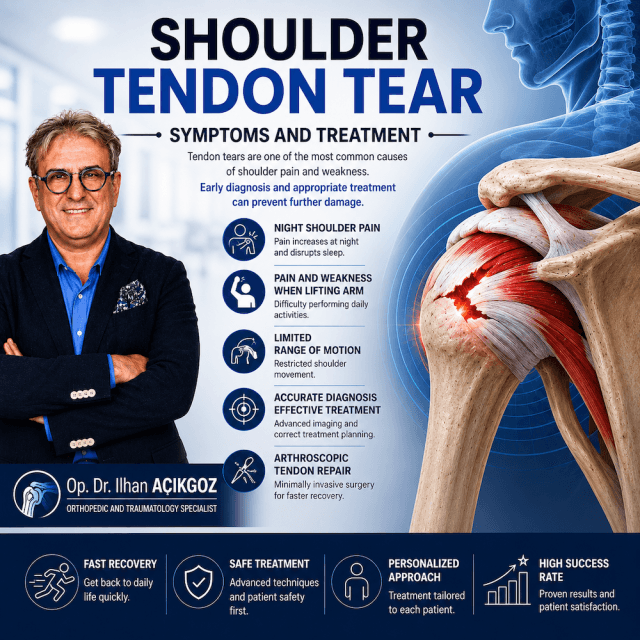
Common symptoms include:
- Shoulder pain
- Pain when lifting the arm
- Weakness
- Night pain
- Difficulty sleeping on the affected side
- Clicking or catching sensations
- Reduced range of motion
- Difficulty reaching overhead
In larger tears, patients may experience significant weakness and loss of shoulder function.
Can a Rotator Cuff Tear Heal on Its Own?
Small tendon injuries may improve with appropriate non-surgical treatment.
However, complete tears generally do not reattach naturally.
Without treatment, some tears may enlarge over time, leading to increased pain and loss of function.
How Is a Rotator Cuff Tear Diagnosed?
Diagnosis typically involves:
Physical Examination
Evaluation of strength, range of motion, and shoulder function.
Imaging Studies
Common imaging methods include:
- X-rays
- Ultrasound
- MRI scans
MRI is particularly useful for determining the size and severity of the tear.
Non-Surgical Treatment Options
Many patients improve without surgery.
Treatment may include:
Activity Modification
Avoiding painful movements and reducing strain on the shoulder.
Physical Therapy
Targeted exercises can improve mobility and strengthen surrounding muscles.
Medications
Anti-inflammatory medications may help reduce discomfort.
Injection Therapy
Selected patients may benefit from corticosteroid injections.
When Is Rotator Cuff Surgery Necessary?
Surgery may be recommended when:
- A complete tear is present
- Significant weakness develops
- Symptoms persist despite conservative treatment
- The tear is progressively enlarging
- Daily activities become severely limited
- An acute traumatic tear occurs in an active individual
Early surgical repair may improve tendon healing and long-term outcomes in selected patients.
What Is Rotator Cuff Repair Surgery?
Rotator cuff repair aims to reattach the torn tendon to the bone.
Most modern repairs are performed arthroscopically using minimally invasive techniques.
Potential benefits include:
- Pain reduction
- Improved strength
- Better shoulder function
- Increased range of motion
- Improved quality of life
Recovery After Rotator Cuff Surgery
Recovery typically involves several phases:
Early Healing Phase
A sling is often used to protect the repair.
Rehabilitation Phase
Physical therapy gradually restores motion and strength.
Functional Recovery
Patients progressively return to normal activities under medical guidance.
Full recovery may require several months depending on tear size and individual healing characteristics.
What Happens If a Rotator Cuff Tear Is Left Untreated?
Untreated tears may lead to:
- Progressive tendon damage
- Muscle atrophy
- Chronic pain
- Shoulder weakness
- Loss of motion
- Rotator cuff arthropathy
- Reduced surgical repair options later
Early evaluation can help prevent these complications.
Evaluation by Op. Dr. İlhan AÇIKGÖZ
Op. Dr. İlhan AÇIKGÖZ provides comprehensive evaluation and treatment for rotator cuff tears, shoulder tendon injuries, sports-related shoulder disorders, and complex shoulder conditions. Treatment plans are tailored to each patient’s symptoms, activity level, and long-term functional goals.
Frequently Asked Questions
How do I know if I have a rotator cuff tear?
Persistent shoulder pain, weakness, difficulty lifting the arm, and night pain are common warning signs. Imaging studies may be needed for confirmation.
Can a rotator cuff tear heal without surgery?
Some partial tears can be managed non-surgically, but complete tears generally do not heal on their own.
Is rotator cuff surgery successful?
Modern arthroscopic rotator cuff repair has high success rates when performed in appropriately selected patients.
How long does recovery take?
Recovery varies, but meaningful improvement continues for several months following surgery.
Can a rotator cuff tear get worse over time?
Yes. Untreated tears may enlarge and become more difficult to repair.
Conclusion
A rotator cuff tear is one of the most common causes of persistent shoulder pain and weakness. Early diagnosis and individualized treatment are essential for preserving shoulder function and preventing long-term damage. Whether treated conservatively or surgically, prompt evaluation by an experienced orthopedic specialist can significantly improve outcomes.