Shoulder Replacement Surgery: Who Is a Candidate and When Is It Necessary?
Persistent shoulder pain can significantly affect daily life, making simple activities such as dressing, lifting objects, sleeping comfortably, or reaching overhead increasingly difficult. While many shoulder conditions respond to conservative treatment, some patients eventually develop advanced joint damage that may require shoulder replacement surgery.
Modern shoulder replacement procedures can dramatically reduce pain, improve mobility, and restore quality of life for patients suffering from severe shoulder arthritis, complex fractures, or irreparable rotator cuff damage.
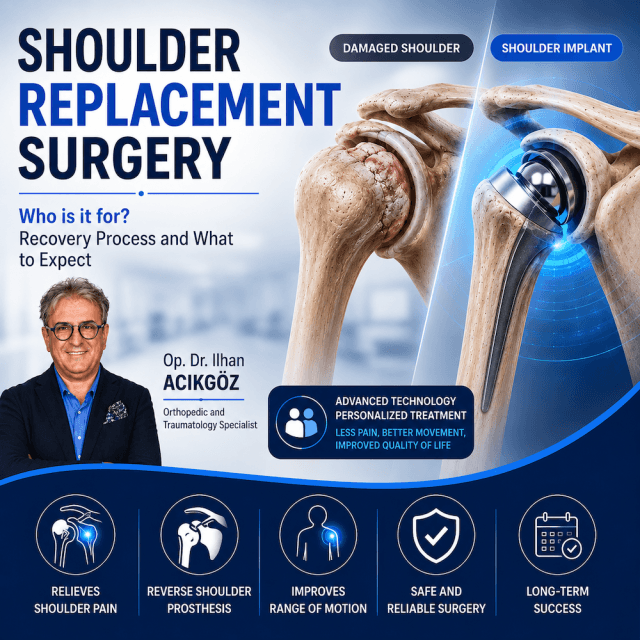
What Is Shoulder Replacement Surgery?
Shoulder replacement surgery, also known as shoulder arthroplasty, involves replacing damaged parts of the shoulder joint with artificial components designed to restore function and reduce pain.
The procedure is typically recommended when non-surgical treatments no longer provide adequate relief.
Several types of shoulder replacement procedures are available:
- Total shoulder replacement
- Reverse shoulder replacement
- Partial shoulder replacement
- Revision shoulder replacement
The most appropriate option depends on the patient’s anatomy, bone quality, and underlying shoulder condition.
When Is Shoulder Replacement Surgery Necessary?
Surgery may be considered when patients experience:
- Persistent shoulder pain
- Severe joint stiffness
- Significant loss of motion
- Difficulty performing daily activities
- Night pain that disrupts sleep
- Progressive shoulder weakness
- Advanced arthritis visible on imaging studies
Patients who have not responded to physical therapy, medications, injections, or other conservative treatments may be candidates for surgery.
Common Conditions That May Require Shoulder Replacement
Advanced Shoulder Osteoarthritis
Wear-and-tear arthritis can gradually destroy the cartilage within the shoulder joint, leading to pain and stiffness.
Rotator Cuff Arthropathy
Large, irreparable rotator cuff tears can alter shoulder mechanics and eventually cause joint degeneration.
Rheumatoid Arthritis
Inflammatory arthritis may damage the shoulder joint over time.
Complex Shoulder Fractures
Certain fractures, particularly in older adults, may not be reconstructable and can require shoulder replacement.
Avascular Necrosis
Loss of blood supply to the humeral head can result in joint collapse and severe pain.
Symptoms That May Indicate the Need for Shoulder Replacement
Patients often report:
- Chronic shoulder pain
- Pain while resting
- Difficulty lifting the arm
- Reduced range of motion
- Weakness
- Grinding or clicking sensations
- Inability to perform daily activities
- Sleep disturbance caused by shoulder pain
These symptoms can progressively worsen without appropriate treatment.
What Is Reverse Shoulder Replacement?
Reverse shoulder replacement is a specialized procedure commonly used when severe rotator cuff damage is present.
In this procedure, the normal ball-and-socket anatomy is reversed, allowing the deltoid muscle to compensate for the damaged rotator cuff.
Reverse shoulder replacement can provide excellent pain relief and functional improvement in appropriately selected patients.
Benefits of Shoulder Replacement Surgery
Potential benefits include:
- Significant pain reduction
- Improved shoulder mobility
- Better sleep quality
- Increased independence
- Enhanced quality of life
- Improved strength and function
Many patients return to everyday activities with substantially less discomfort after recovery.
Recovery After Shoulder Replacement Surgery
Recovery varies from patient to patient but generally includes:
Early Recovery
- Sling protection
- Pain management
- Gentle rehabilitation exercises
Physical Therapy
A structured rehabilitation program helps restore mobility and strength.
Long-Term Recovery
Most patients continue improving for several months following surgery.
Successful outcomes depend on:
- Surgical technique
- Implant positioning
- Bone quality
- Patient compliance with rehabilitation
How Long Does a Shoulder Replacement Last?
Modern shoulder implants are designed to provide long-term durability.
Longevity depends on factors such as:
- Patient age
- Activity level
- Bone quality
- Implant design
- Overall health
Many modern shoulder replacements can function successfully for many years.
Risks and Potential Complications
As with any surgical procedure, risks may include:
- Infection
- Implant loosening
- Instability
- Nerve injury
- Fracture
- Stiffness
- Need for revision surgery
Careful surgical planning and postoperative monitoring help minimize these risks.
Evaluation by Op. Dr. İlhan AÇIKGÖZ
Op. Dr. İlhan AÇIKGÖZ provides comprehensive evaluation and treatment for advanced shoulder disorders, including severe arthritis, rotator cuff arthropathy, complex shoulder injuries, and shoulder replacement surgery. Treatment plans are individualized to achieve optimal pain relief, functional recovery, and long-term joint stability.
Frequently Asked Questions
Is shoulder replacement surgery painful?
Postoperative discomfort is expected, but modern pain management techniques help control pain effectively during recovery.
How long does recovery take?
Initial recovery typically takes several weeks, while full functional improvement may continue for several months.
What is the difference between total and reverse shoulder replacement?
Total shoulder replacement preserves the natural anatomy, while reverse shoulder replacement changes the joint mechanics to compensate for severe rotator cuff damage.
Can I return to sports after shoulder replacement?
Many patients return to recreational activities after recovery, depending on their overall condition and surgeon recommendations.
How successful is shoulder replacement surgery?
Shoulder replacement surgery is generally associated with high patient satisfaction and substantial improvements in pain and function.
Conclusion
Shoulder replacement surgery can be a highly effective solution for patients suffering from severe shoulder arthritis, irreparable rotator cuff damage, or complex joint degeneration. Early evaluation and appropriate treatment planning can help restore mobility, reduce pain, and significantly improve quality of life.