Frozen Shoulder Treatment: How to Relieve Pain and Restore Shoulder Mobility
Are you struggling to lift your arm overhead, reach behind your back, or perform simple daily activities such as getting dressed or fastening a seatbelt? If shoulder stiffness and pain continue to worsen over time, you may be experiencing a condition known as frozen shoulder, medically referred to as adhesive capsulitis.
Frozen shoulder is a common condition that causes progressive pain and restricted shoulder movement. With early diagnosis and appropriate treatment, most patients can regain shoulder function and return to normal daily activities.
What Is Frozen Shoulder?
Frozen shoulder occurs when the capsule surrounding the shoulder joint becomes inflamed, thickened, and stiff. As the capsule tightens, shoulder movement becomes increasingly restricted.
The condition typically develops gradually and progresses through different stages over several months.
Frozen shoulder can significantly affect daily life, making it difficult to:
- Reach overhead
- Comb your hair
- Fasten a bra
- Put on a jacket
- Sleep comfortably
- Lift objects
What Causes Frozen Shoulder?
The exact cause is not always clear. However, several factors can increase the risk:
- Diabetes
- Thyroid disorders
- Shoulder injuries
- Rotator cuff problems
- Previous shoulder surgery
- Prolonged shoulder immobilization
- Stroke
- Neurological disorders
People between the ages of 40 and 60 are most commonly affected.
Symptoms of Frozen Shoulder
Common symptoms include:
- Gradually increasing shoulder pain
- Stiffness
- Reduced range of motion
- Difficulty reaching overhead
- Pain during sleep
- Difficulty performing daily activities
- Loss of shoulder flexibility
Symptoms often worsen gradually before improving.
The Three Stages of Frozen Shoulder
1. Freezing Stage
Pain gradually increases and shoulder movement becomes more restricted.
This phase may last several months.
2. Frozen Stage
Pain may decrease somewhat, but stiffness becomes more severe.
Daily activities become increasingly difficult.
3. Thawing Stage
Shoulder mobility gradually improves.
Recovery may continue for many months.
How Is Frozen Shoulder Diagnosed?
Diagnosis begins with a detailed medical history and physical examination.
Additional imaging studies may include:
- X-rays
- Ultrasound
- MRI scans
These tests help rule out other causes of shoulder pain, including rotator cuff tears, arthritis, and tendon disorders.
Can Frozen Shoulder Go Away on Its Own?
Some patients eventually experience gradual improvement without surgery. However, recovery may take one to three years and significant stiffness can persist.
Early treatment often improves comfort and helps restore mobility more efficiently.
Non-Surgical Treatment Options
Most patients respond well to conservative treatment.
Physical Therapy
Targeted stretching and mobility exercises are essential components of treatment.
Pain Management
Anti-inflammatory medications may help control symptoms during painful stages.
Corticosteroid Injections
In selected patients, injections may reduce inflammation and improve movement.
Activity Modification
Avoiding painful movements while maintaining gentle mobility is often recommended.
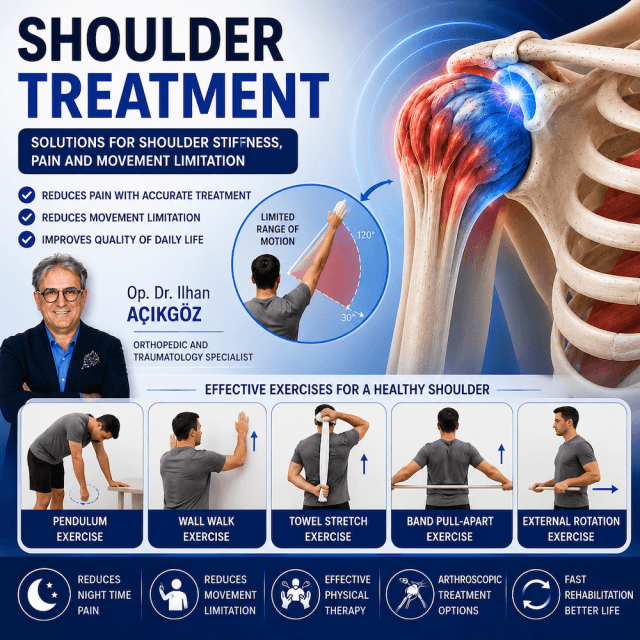
Frozen Shoulder Exercises
Exercises play a critical role in recovery.
Common exercises include:
Pendulum Exercise
Gentle circular arm movements help maintain mobility.
Finger Walk Exercise
Using the fingers to “walk” up a wall gradually improves shoulder elevation.
Cross-Body Stretch
Improves flexibility of the shoulder capsule.
Towel Stretch
Helps restore internal rotation and behind-the-back movement.
Exercise programs should be individualized according to the stage of the condition.
When Is Surgery Necessary?
Surgery may be considered when:
- Severe stiffness persists
- Conservative treatment fails
- Daily activities remain significantly restricted
- Symptoms continue despite prolonged rehabilitation
Arthroscopic Frozen Shoulder Release
This minimally invasive procedure releases the tightened capsule and improves shoulder mobility.
Many patients experience substantial improvement after surgery combined with rehabilitation.
Recovery After Frozen Shoulder Treatment
Recovery depends on:
- Severity of stiffness
- Duration of symptoms
- Patient age
- Underlying medical conditions
- Commitment to rehabilitation
Most patients achieve meaningful improvements in pain and shoulder function with appropriate treatment.
Evaluation by Op. Dr. İlhan AÇIKGÖZ
Op. Dr. İlhan AÇIKGÖZ provides comprehensive evaluation and treatment for frozen shoulder, shoulder stiffness, rotator cuff disorders, and other complex shoulder conditions. Every treatment plan is tailored to the patient’s symptoms, mobility limitations, and functional goals.
The primary objective is to relieve pain, restore movement, and help patients safely return to their normal daily activities.
Frequently Asked Questions
What is the fastest way to recover from frozen shoulder?
Early diagnosis, physical therapy, and a structured exercise program generally provide the best outcomes.
Can frozen shoulder return after treatment?
Recurrence is uncommon but can occur in some patients.
Is frozen shoulder related to diabetes?
Yes. Frozen shoulder occurs more frequently in people with diabetes.
Are exercises important for frozen shoulder?
Absolutely. Mobility exercises are one of the most important components of treatment.
When should I see a specialist?
If shoulder pain and stiffness continue to worsen or interfere with daily activities, an orthopedic evaluation is recommended.
Conclusion
Frozen shoulder is a painful and frustrating condition that can significantly limit daily activities and quality of life. Fortunately, most patients improve with appropriate treatment, physical therapy, and guided rehabilitation. Early diagnosis and individualized care are essential for restoring shoulder mobility and preventing long-term stiffness.