What Is a Meniscus Tear?
The meniscus is a C-shaped piece of cartilage inside the knee joint that acts as a shock absorber between the femur and tibia. Each knee contains two menisci that help distribute weight, improve stability, and protect the joint cartilage.
A meniscus tear is one of the most common knee injuries and may occur during sports activities, sudden twisting movements, trauma, or age-related degeneration.
Without appropriate treatment, a meniscus injury can lead to persistent pain, limited mobility, and long-term joint damage.
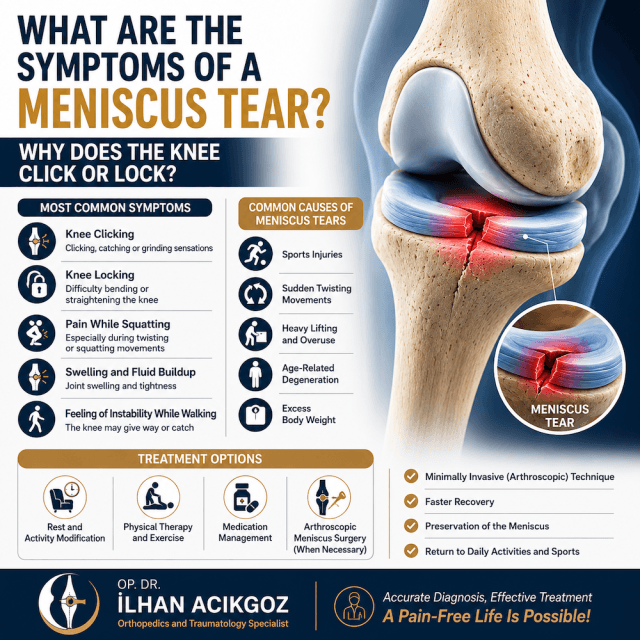
What Are the Symptoms of a Meniscus Tear?
Symptoms vary depending on the size and location of the tear.
Common symptoms include:
- Knee pain
- Clicking or popping sounds
- Knee locking
- Swelling
- Difficulty bending the knee
- Reduced range of motion
- A feeling that the knee may give way
- Pain during squatting or twisting
Some patients experience symptoms immediately after injury, while others develop problems gradually over time.
Why Does a Meniscus Tear Cause Knee Clicking?
Many patients report hearing or feeling clicking inside the knee.
This occurs because a torn portion of the meniscus may move abnormally during joint motion.
The damaged tissue can interfere with normal knee mechanics and create:
- Clicking sensations
- Popping sounds
- Catching episodes
- Grinding feelings
Occasional painless clicking may be harmless, but persistent clicking accompanied by pain should be evaluated.
Why Does the Knee Lock?
Knee locking is one of the classic symptoms of certain meniscus tears.
A torn fragment may become trapped between the joint surfaces, temporarily preventing normal movement.
Patients may notice:
- Sudden inability to fully extend the knee
- A sensation that something is stuck inside the joint
- Pain during movement
- Episodes of mechanical blockage
True locking often indicates a more significant tear pattern that may require surgical treatment.
What Causes a Meniscus Tear?
Meniscus injuries commonly occur due to:
Sports Injuries
Sudden twisting while the foot remains planted can place excessive stress on the meniscus.
Common sports include:
- Football
- Basketball
- Tennis
- Skiing
- Running
Degenerative Changes
As people age, the meniscus gradually becomes less flexible and more vulnerable to injury.
Even minor movements may result in tearing in older adults.
Trauma
Falls, direct blows, and accidents may also damage the meniscus.
Can a Meniscus Tear Heal on Its Own?
Some small tears located in areas with a good blood supply may heal naturally.
However, many meniscus tears have limited healing potential because large portions of the meniscus receive very little blood flow.
Treatment recommendations depend on:
- Tear location
- Tear size
- Patient age
- Activity level
- Associated injuries
How Is a Meniscus Tear Diagnosed?
Diagnosis usually includes:
- Medical history
- Physical examination
- Special orthopedic tests
- MRI imaging
MRI is considered the most useful imaging method for confirming meniscus injuries and evaluating associated knee damage.
Non-Surgical Treatment Options
Many patients improve with conservative management.
Treatment may include:
- Rest
- Ice application
- Activity modification
- Anti-inflammatory medication
- Physical therapy
- Strengthening exercises
Non-surgical treatment is often appropriate for smaller tears and degenerative injuries.
When Is Surgery Necessary?
Surgery may be recommended when patients experience:
- Persistent pain
- Recurrent swelling
- Knee locking
- Mechanical symptoms
- Large tears
- Failure of conservative treatment
Modern arthroscopic techniques allow many meniscus procedures to be performed through minimally invasive surgery.
What Is Arthroscopic Meniscus Surgery?
Arthroscopy is a minimally invasive procedure performed through small incisions using a camera and specialized instruments.
Depending on the injury, the surgeon may:
- Repair the torn meniscus
- Remove unstable fragments
- Preserve as much healthy meniscal tissue as possible
Preserving meniscal tissue is important for maintaining long-term knee health.
Evaluation by Op. Dr. İlhan AÇIKGÖZ
Op. Dr. İlhan AÇIKGÖZ provides comprehensive diagnosis and treatment for meniscus tears, sports injuries, knee instability, cartilage damage, and other orthopedic knee conditions. Individualized treatment plans are designed to relieve pain, restore mobility, and protect long-term joint function.
Frequently Asked Questions
What does a meniscus tear feel like?
Most patients experience knee pain, swelling, clicking, or a sensation of catching during movement.
Can a meniscus tear cause knee locking?
Yes. Certain tear patterns can physically block knee motion and cause locking.
Is knee clicking always caused by a meniscus tear?
No. Knee clicking may also occur due to patellar problems, cartilage wear, or normal joint mechanics.
Do all meniscus tears require surgery?
No. Many meniscus injuries can be treated successfully without surgery.
How long does recovery take after meniscus surgery?
Recovery varies depending on the type of procedure and the patient’s overall condition.
Conclusion
Meniscus tears are among the most common causes of knee pain, clicking, and locking. Early diagnosis and appropriate treatment are essential for preventing long-term joint damage and maintaining normal knee function. Patients experiencing persistent knee symptoms should seek orthopedic evaluation to determine the most effective treatment strategy.