Is It a Herniated Disc or a Muscle Strain?
Lower back pain is one of the most common musculoskeletal complaints worldwide. It affects people of all ages and can significantly impact daily activities, work performance, and overall quality of life.
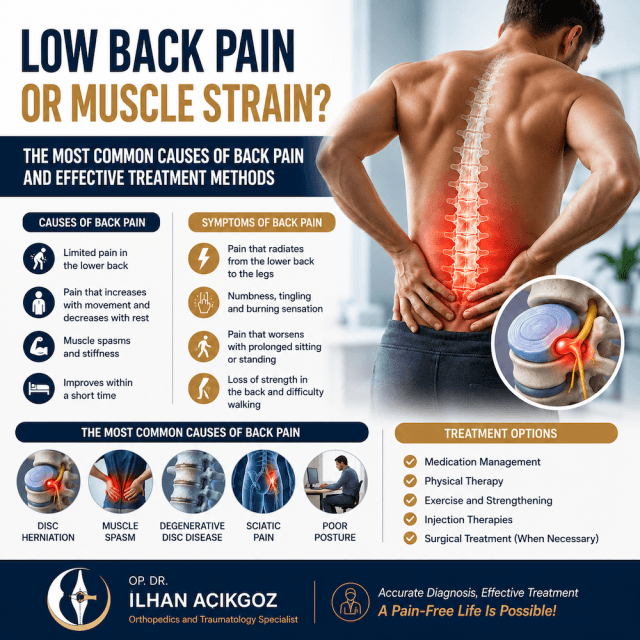
Many patients experiencing back pain immediately assume they have a herniated disc. However, not every episode of lower back pain is caused by a spinal disc problem. In many cases, muscle strain, ligament injuries, poor posture, or degenerative spinal conditions may be responsible.
Understanding the underlying cause is essential for choosing the most effective treatment.
What Is a Herniated Disc?
The spine contains intervertebral discs that act as cushions between the vertebrae. These discs help absorb shock and allow flexibility during movement.
A herniated disc occurs when the inner portion of a disc pushes through its outer layer and irritates nearby nerves.
This condition is most commonly seen in the lumbar spine (lower back).
Symptoms of a Herniated Disc
Common symptoms include:
- Lower back pain
- Pain radiating into the buttock
- Leg pain (sciatica)
- Numbness or tingling
- Muscle weakness
- Burning sensations in the leg
- Difficulty standing or walking
Symptoms vary depending on the location and severity of nerve compression.
What Is a Muscle Strain?
A muscle strain occurs when muscle fibers or surrounding soft tissues become overstretched or injured.
Muscle strains commonly develop after:
- Heavy lifting
- Sudden movements
- Sports injuries
- Poor posture
- Overuse
Unlike a herniated disc, muscle strain usually does not cause significant nerve-related symptoms.
Symptoms of a Muscle Strain
Patients commonly report:
- Localized lower back pain
- Muscle stiffness
- Tenderness
- Pain during movement
- Muscle spasms
- Difficulty bending
Pain is generally confined to the lower back and does not typically radiate below the knee.
Herniated Disc vs. Muscle Strain
Several features can help distinguish the two conditions.
More Suggestive of a Herniated Disc
- Pain radiating down the leg
- Numbness or tingling
- Weakness
- Sciatica symptoms
- Pain worsening with coughing or sneezing
More Suggestive of a Muscle Strain
- Pain localized to the back
- Muscle tightness
- Tenderness over muscles
- Improvement with rest
- No neurological symptoms
A proper orthopedic evaluation is often required for an accurate diagnosis.
Other Common Causes of Lower Back Pain
Not all lower back pain is caused by discs or muscles.
Other possible causes include:
- Degenerative disc disease
- Facet joint arthritis
- Spinal stenosis
- Scoliosis
- Sacroiliac joint dysfunction
- Vertebral fractures
- Postural problems
- Osteoarthritis
Each condition requires a different treatment approach.
What Is Sciatica?
Sciatica refers to pain that travels along the sciatic nerve, usually from the lower back into the buttock and leg.
Common symptoms include:
- Sharp shooting pain
- Burning sensations
- Tingling
- Numbness
- Leg weakness
Sciatica is frequently associated with lumbar disc herniation but may also result from other spinal conditions.
How Is Lower Back Pain Diagnosed?
Diagnosis typically begins with a detailed medical history and physical examination.
Additional tests may include:
- X-rays
- MRI scans
- CT scans
- Neurological assessment
Advanced imaging helps identify nerve compression, disc pathology, and other structural abnormalities.
Treatment Options for Lower Back Pain
Treatment depends on the underlying cause.
Non-Surgical Treatments
Many patients improve with:
- Physical therapy
- Core strengthening exercises
- Activity modification
- Anti-inflammatory medication
- Postural correction
- Weight management
Most cases of acute back pain improve without surgery.
When Is Surgery Necessary?
Surgical treatment may be considered when patients experience:
- Severe nerve compression
- Progressive muscle weakness
- Persistent sciatica
- Loss of bladder or bowel control
- Failure of conservative treatment
Modern spine surgery techniques can often provide significant symptom relief when appropriately indicated.
Evaluation by Op. Dr. İlhan AÇIKGÖZ
Op. Dr. İlhan AÇIKGÖZ provides comprehensive evaluation and treatment for lower back pain, lumbar disc herniation, sciatica, degenerative spinal disorders, and other musculoskeletal conditions. Each patient receives an individualized treatment plan designed to relieve pain, improve mobility, and restore quality of life.
Frequently Asked Questions
Can muscle strain feel like a herniated disc?
Yes. Both conditions can cause lower back pain, but nerve-related symptoms are more common with herniated discs.
Does every herniated disc require surgery?
No. Most patients improve with conservative treatment and do not require surgery.
How long does a muscle strain take to heal?
Many muscle strains improve within a few weeks with appropriate treatment and activity modification.
What are the warning signs of a serious disc problem?
Progressive weakness, severe leg pain, numbness, and bladder or bowel dysfunction require urgent medical attention.
Can physical therapy help lower back pain?
Yes. Physical therapy is one of the most effective treatments for many causes of lower back pain.
Conclusion
Lower back pain can result from many different conditions, including muscle strain, herniated discs, degenerative spinal disorders, and nerve compression. While many cases improve with conservative treatment, persistent symptoms, leg pain, numbness, or weakness should be evaluated by an orthopedic specialist. Early diagnosis is essential for achieving the best possible outcome and preventing long-term complications.